Hydrogen & Oxygen Inhalation at Home: How It Works, What the Research Actually Says, and What This Machine Delivers
A closer look at the Hydrogen & Oxygen Inhalation Machine
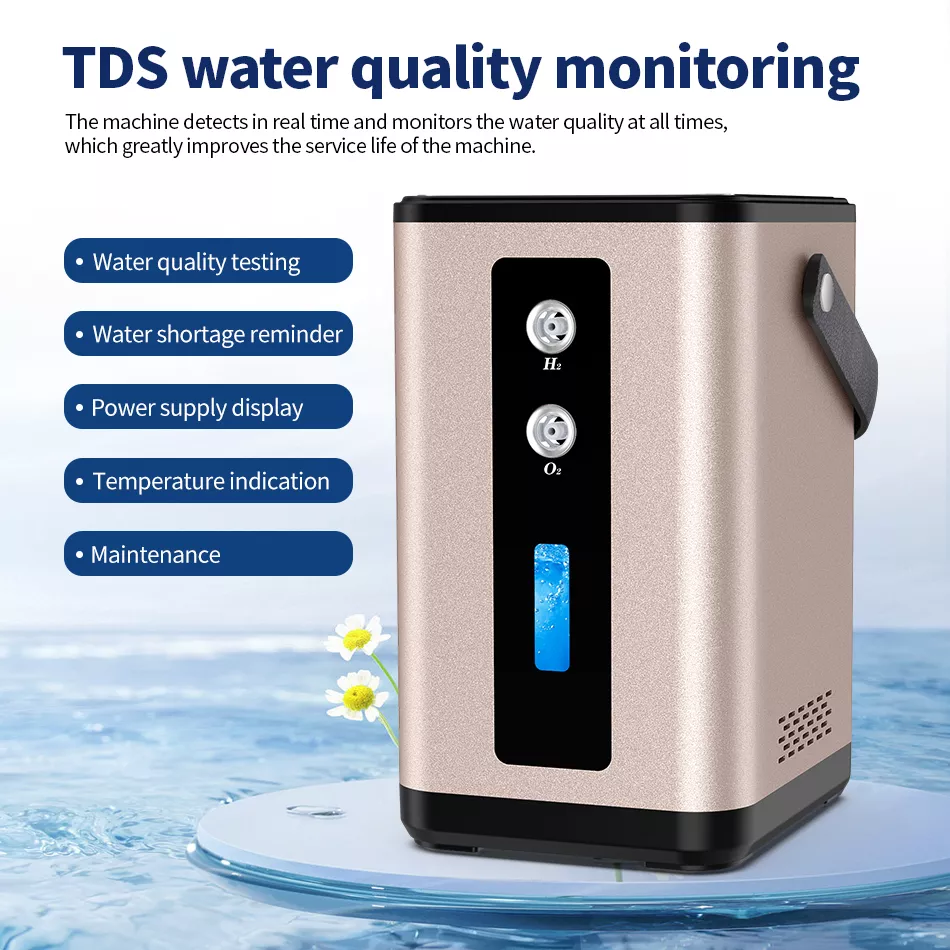
The Hydrogen & Oxygen Inhalation Machine — compact, gold-finished home unit
Hydrogen inhalation has quietly gone from a niche interest among longevity researchers to something you can plug in on your nightstand. The idea itself isn't new — the first published research on molecular hydrogen as a therapeutic antioxidant dates back to a 2007 study in Nature Medicine — but home devices that generate and deliver the gas on demand are a much more recent development. This is a walkthrough of how these machines actually work, what the science currently supports (and doesn't), and a look at the specs on one compact, home-friendly option: the Hydrogen & Oxygen Inhalation Machine.
How a Hydrogen & Oxygen Inhalation Machine Actually Works
At its core, one of these machines is a small electrolysis unit. It runs an electric current through distilled water, which splits the water molecule (H₂O) into its two components: hydrogen gas and oxygen gas. Higher-end units use a proton exchange membrane (PEM) to do this cleanly, without additives or chemical byproducts, which is how manufacturers get to gas purity levels quoted as high as 99.99%. The gas is then delivered through a nasal cannula or mask so it can be inhaled directly.
This is also why the hydrogen-to-oxygen ratio you'll see quoted on these machines matters. Water is naturally two hydrogen atoms to one oxygen atom, so a well-built electrolysis unit will output gas in roughly that same 2:1 ratio. On this particular machine, that works out to 300ml of hydrogen paired with 150ml of oxygen per session.
What the Research on Molecular Hydrogen Actually Shows
Molecular hydrogen (H₂) is the smallest, lightest molecule there is, which lets it diffuse rapidly across cell membranes and reach places bulkier antioxidants can't — including, in animal studies, the mitochondria and the brain. The scientific interest largely traces back to a landmark 2007 paper showing that H₂ acts as a selective antioxidant: it appears to neutralize particularly damaging free radicals (like the hydroxyl radical) while leaving the reactive oxygen species your body actually uses for normal cell signaling alone. That selectivity is the main reason researchers got excited — most antioxidants aren't picky about what they neutralize.
Since then, hydrogen gas and hydrogen-rich water have been studied — mostly in small human trials, animal models, and in vitro work — across a genuinely wide range of areas: oxidative stress reduction, inflammation, exercise recovery, metabolic markers, and as an adjunct alongside standard treatment in some cardiovascular and oncology research settings. Some of that research is encouraging. Molecular hydrogen has also been tested clinically as a supportive inhalation therapy in respiratory illness, and there's an actively growing base of registered clinical trials investigating it further.
What's in the Box: Specs at a Glance
| Hydrogen purity | Up to 99.99% |
| Gas output ratio | 2:1 — 300ml H₂ + 150ml O₂ |
| Timer settings | 1 hr / 2 hr / 3 hr |
| Power draw | 150W |
| Dimensions | 5.9 x 7 x 10.4 in |
| Finish | Compact gold housing |
| Plug options | US / UK / EU / AU / JP |
Who Tends to Reach for One of These
Based on how these devices are typically used day to day, the people who get the most out of one tend to fall into a few overlapping groups:
- Wellness and recovery enthusiasts who already have a routine — sauna, cold plunge, breathwork — and are curious about layering in a low-effort, sit-and-breathe addition.
- Athletes and active people interested in the antioxidant and recovery angle after training, using it the way they might use a foam roller or a recovery session.
- Biohackers and longevity-curious readers who follow the molecular hydrogen research directly and want to try inhalation at home rather than visiting a wellness clinic for each session.
- Anyone prioritizing an antioxidant-focused routine who wants a device that requires nothing more than distilled water and an outlet.
Using It Sensibly: A Few Notes on Safety
Hydrogen gas is flammable at concentrations above roughly 4% in air, which is why reputable inhalation machines are engineered to generate and deliver the gas immediately at low, continuous concentrations rather than storing it under pressure. Reviews of the clinical literature have generally reported hydrogen inhalation as well tolerated, with drowsiness being one of the few mild effects noted in some studies. That said, a few sensible ground rules apply to any device like this:
- Use distilled water only, and follow the manufacturer's cleaning and maintenance instructions.
- Keep the unit away from open flames and use it in a ventilated space, as with any gas-generating appliance.
- This is a wellness device, not a diagnostic or FDA-approved medical treatment. It isn't a substitute for prescribed care.
Getting Started
If the science of molecular hydrogen has piqued your curiosity, a compact home unit is a reasonably low-commitment way to try it without booking clinic sessions. This particular machine keeps things simple: high-purity gas output, a straightforward 1/2/3-hour timer, and a design small enough to live on a countertop or nightstand rather than take over a room.

No comments:
Post a Comment